Date: June 25, 2026
Location: Crecimiento, Buenos Aires, Argentina
Luma: Logos Circle BA #3 · Luma
Registered on Luma: 46
Attendance: 10 participants
Overview
The third Buenos Aires Circle focused on welcoming a new group of participants while building upon the collaborative work initiated during the previous workshop. Since most attendees were joining for the first time, we began with introductions, an overview of Logos, the purpose of Circles and the motivation behind creating local communities connected to a global network.
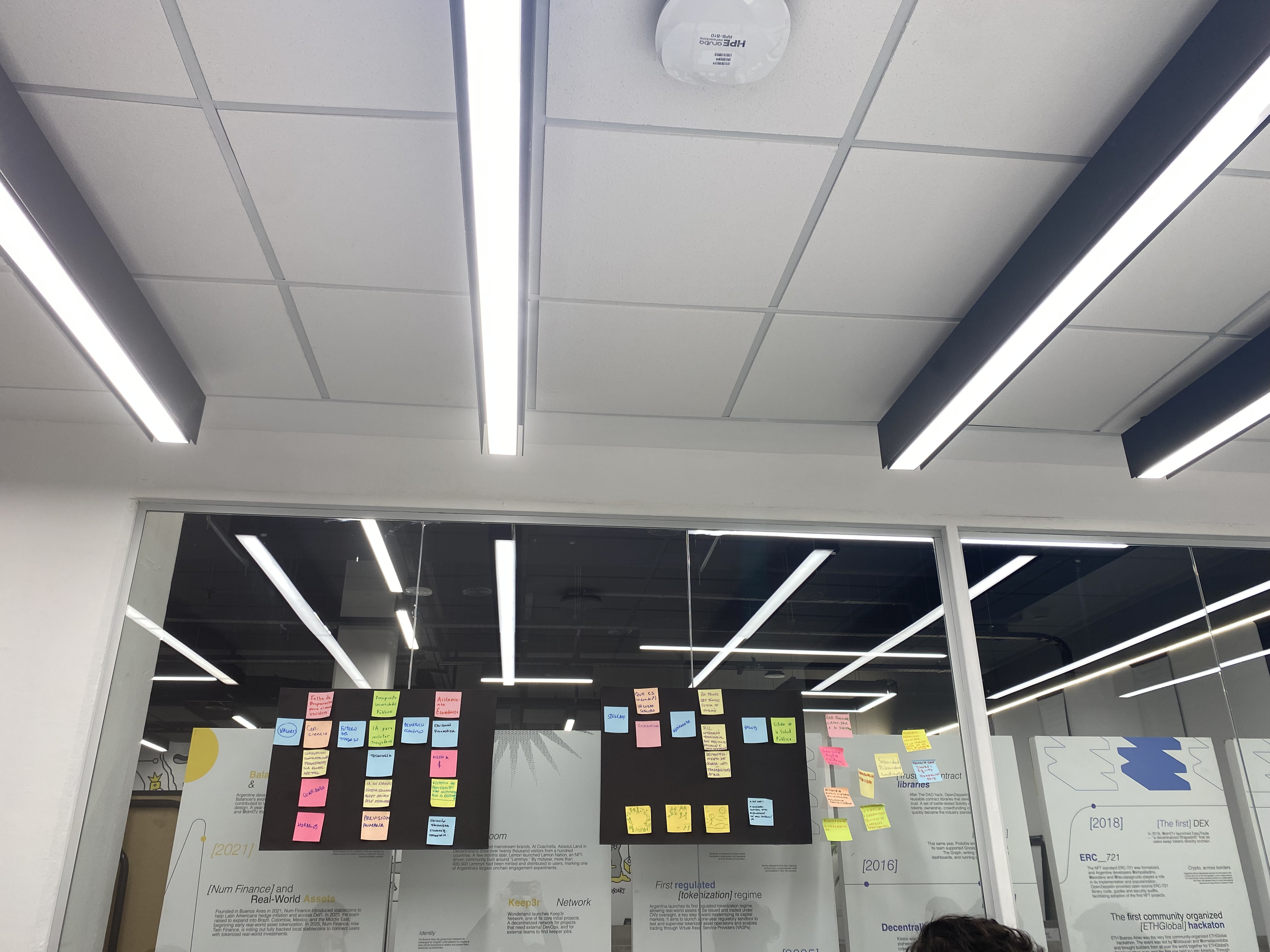
Rather than starting from scratch, we revisited the “winnable issues” map developed during the May Circle and invited newcomers to expand it with their own perspectives and priorities. This allowed the community to preserve continuity while remaining open to fresh ideas.
Participants
The Circle brought together people from a wide range of disciplines, including software development, architecture, public policy, real estate, gaming, and regenerative design.
Some notable perspectives included:
-
Ezequiel: shared his work on Free Trade Zone initiatives, as well as his interests in permaculture and gaming.
-
Tomás: a software developer, expressed interest in attending Logos Circles across Europe during his upcoming travels, highlighting the value of connecting local communities through a shared global network.
-
Maxi: an architect, identified housing affordability as one of today’s most pressing societal challenges and proposed exploring new financial instruments and customized co-living models.
-
Mateo and Teo: they are partners presented ideas related to real estate platforms and alternative ownership models.
-
Agustina: contributed perspectives from public policy.
-
Gisela and Guido: also partners enriched the discussion with additional viewpoints from fintech and defi perspective.
Workshop Format
Building on the positive experience of the previous Circle, we repeated the collaborative workshop format.
Participants first reviewed the themes and “winnable issues” identified during the May session before adding new ideas and expanding existing clusters. This approach ensured continuity while allowing newcomers to immediately contribute to the community’s evolving priorities.
The workshop continues to serve as a living map of the interests and challenges emerging within the Buenos Aires Circle.
Discussion Topics
Beyond the workshop, participants explored several broader themes related to governance, technology, and coordination:
-
Different conceptions of human rights, including a discussion comparing natural rights with state-granted rights through the example of China.
-
Legal and financial infrastructure, including Argentina’s simplified corporate structures (SAS) and their relationship with entrepreneurship.
-
Decentralized communication technologies such as Bitchat and Meshtastic, and their potential role in resilient communities.
-
Financial sovereignty and the implications of international payment restrictions, using the Russian exclusion from SWIFT as a case study.
-
Funding mechanisms for public goods, including Cardano Catalyst and tokenization initiatives such as Ondo.
-
Community awareness campaigns and experimentation through collaborative idea labs.
Emerging Themes
As new participants contributed to the workshop, several themes gained additional momentum:
-
Housing affordability and alternative ownership models.
-
Decentralized governance.
-
Financial infrastructure.
-
Public policy innovation.
-
Community resilience.
-
Regenerative systems.
-
Real estate tokenization.
-
Privacy-preserving communication.
-
Open collaboration across the global Logos ecosystem.
Global Ecosystem Update
As a follow-up to feedback gathered during the previous Circle, I prepared a short presentation highlighting several winnable issues and ongoing experiments from other Logos Circles around the world.
The objective was to show that participants don’t necessarily need to start projects from scratch. Instead, they can contribute to existing initiatives, exchange ideas with other communities, or adapt successful experiments to the Argentine context.
This overview also reinforced one of the core principles of the Circle program: while each community addresses local challenges, all Circles form part of a broader network of experimentation and shared learning.
Key Insights
Several observations emerged from this Circle:
-
Reusing the workshop from the previous month proved highly effective. Rather than restarting the conversation, new participants were able to build on the existing work and contribute additional perspectives.
-
The diversity of professional backgrounds continues to strengthen the quality of discussions and reveal unexpected connections between different domains.
-
Participants showed growing interest in practical experimentation, particularly around governance, financial infrastructure, housing, and decentralized coordination.
-
There is increasing curiosity about connecting Buenos Aires with other Logos Circles worldwide, reinforcing the networked nature of the initiative.
Outcomes
-
The collaborative “winnable issues” map was expanded with contributions from new participants.
-
Several attendees expressed interest in participating in future Circles and engaging with the broader Logos ecosystem.
-
The workshop methodology has now been successfully validated across two consecutive events and will continue serving as the foundation for future Buenos Aires Circles.
-
Participants were introduced to several winnable issues and experiments from other Logos Circles, creating new opportunities for cross-Circle collaboration and demonstrating how local communities can contribute to ongoing global initiatives.
Lessons Learned
-
Beginning the session with an introduction to Logos and the purpose of Circles proved essential, as most attendees were participating for the first time.
-
Revisiting previous workshop outputs helped maintain continuity while making newcomers feel included in an ongoing process rather than isolated discussions.
-
Participants appreciated balancing philosophical conversations with practical examples and real-world projects.
-
Feedback from the previous Circle proved valuable. Several participants appreciated learning about ongoing projects across the global Logos network, confirming that many community members are interested in contributing to existing initiatives as much as creating new ones locally. We’ll continue dedicating time in future Circles to sharing updates from other communities and identifying opportunities for collaboration.
Looking Ahead
After three consecutive Circles, the Buenos Aires community is beginning to establish a consistent rhythm. Each gathering has built upon the previous one: first by forming an interdisciplinary community then by identifying shared challenges and now by refining those priorities while welcoming new contributors.
Going forward the focus will shift from identifying opportunities to fostering concrete collaborations, both locally and across the broader Logos network.