Date: March 25th - 2026
Location: Crecimiento, Buenos Aires, Argentina
Luma: Logos Circle BA #1 · Luma
Registered on Luma: 43
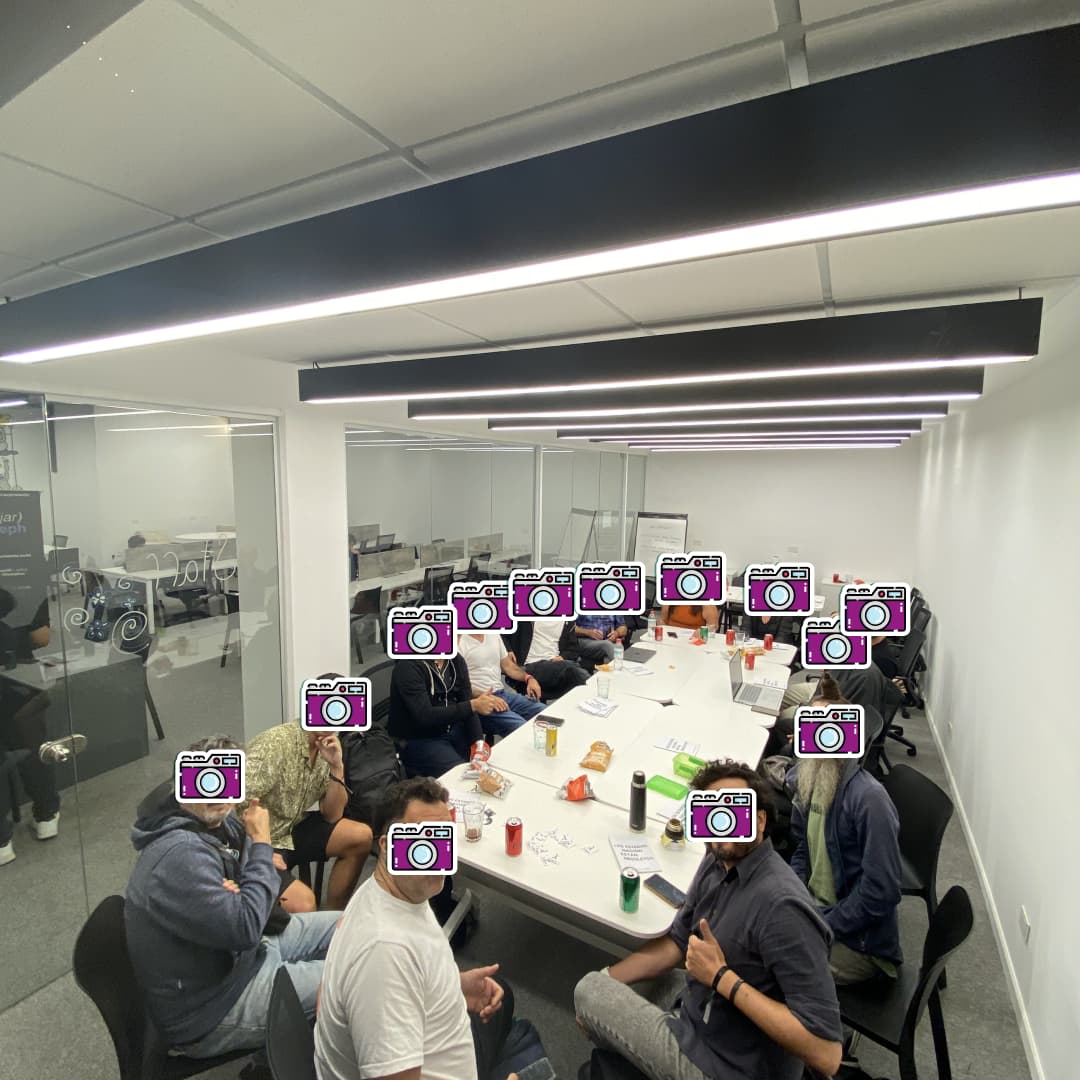
Attended: 15 participants
Languages: Spanish (main), English
Participants Nationalities: Argentinian, Italian, Venezuelan
Overview
The first Buenos Aires Logos Circle of the year brought together an intentionally diverse group of builders, entrepreneurs, developers, academics, investors, and public policy professionals. Rather than focusing exclusively on crypto or blockchain, the conversation explored how decentralized technologies can address real-world societal challenges.
A recurring theme throughout the evening was the desire to move beyond financial speculation and use technology to build more transparent, regenerative, and human-centered systems.
Participant Highlights
The diversity of backgrounds created a particularly rich discussion:
-
Doko: he’s a journalist and introduced the concept of Holonic Finance: presented ideas around connecting circular economies and making care work visible as a fundamental component of the real economy.
-
Michele: orginally from Italy, he’s now living in Buenos Aires. He is inspired by regenerative finance initiatives and previous collaborations with Vitalik Buterin, he emphasized that technology should be designed to avoid reproducing corrupt incentives. He met with Logos team back in Thailand.
-
Franca: originally from Venezuela and founder of Blockchain Academy Argentina, shared her mission of democratizing access to technology and reducing the gender gap in Web3 education.
-
Viviana: an installer of renewable energy systems, smart contract developer, and startup founder, discussed applying blockchain beyond finance—particularly to improve transparency in logistics and supply chains. She also shared her perspective as both a mother and grandmother working in emerging technologies.
-
Claudio: described entering crypto through speculation but staying because of the technology itself. He expressed strong interest in Network States and projects such as Próspera.
-
Tomás: a self-taught Solidity developer and product manager, spoke about winning an ETHGlobal hackathon and participating in projects incubated by Uniswap.
-
Berni: a political scientist, recruiter, and venture investor, explored how decentralized governance could evolve as traditional social democratic states face increasing fiscal pressure. Drawing on his experience helping organize the Olympic Village in Barcelona, he questioned how tokenized private initiatives might solve large-scale coordination problems. He also raised an important question for the group: How is a Network State fundamentally different from a WhatsApp community?
-
Leonardo: fractional CTO for several startups and member of the Bitcoin Argentina NGO, contributed perspectives from telecommunications, startup development, and Bitcoin advocacy.
-
Tomas: works in marketing and sales
-
Marcos: Tomas’ partner
-
Ricardo: currently working at Universidad Católica Argentina (UCA), shared extensive experience organizing large-scale public events, including work with organizations such as Clarín and YPF, as well as previous involvement with Partido de la Red alongside Santiago Siri.
-
Hernán: discussed his transition from hardware engineering into growth and shared his experience winning the 2024 hackathon with a project focused on tokenization and traceability for free trade zones.
-
Ernesto, with experience at Bunge & Born, emphasized the importance of combining technology with nature, arguing that meaningful innovation emerges from connecting people and recognizing that communities are neither isolated nor alone. He also highlighted opportunities related to healthcare initiatives and vaccine development.
-
Franco: shared his experience participating in the Aleph hackathon and reflected on the value of open collaboration.
Main Discussion Themes
Several conversations naturally converged around common ideas:
-
How decentralized technologies can create impact beyond financial applications.
-
Regenerative finance and circular economic models.
-
Transparency in logistics, supply chains, and public infrastructure.
-
Democratizing access to technology and reducing barriers to participation.
-
The practical meaning of Network States and their differences from existing online communities.
-
Building technologies that strengthen social coordination instead of reinforcing extractive incentives.
Winnable Issues
During the closing discussion, participants proposed several societal challenges that could become future collaborative initiatives:
-
Making invisible care work economically visible.
-
Creating transparent fundraising platforms.
-
Applying blockchain to free trade zones and logistics.
-
Improving civic engagement among high school and university students, addressing growing apathy.
-
Exploring healthcare innovation, including funding models for cancer vaccine research.
-
Evaluating whether cyber states or Network States can become viable governance models.
Key Insights
Several insights emerged from the conversation:
-
Most participants entered crypto through different paths, but many remained because of its potential to solve coordination problems rather than for financial speculation.
-
There was strong interest in applying blockchain technology to tangible real-world challenges, particularly in logistics, education, healthcare, governance and sustainability.
-
Participants valued the interdisciplinary nature of the Circle. The combination of developers, entrepreneurs, academics, investors and public policy professionals generated conversations that would not typically occur within a purely technical meetup.
-
Rather than seeking immediate solutions, the group demonstrated curiosity about identifying meaningful problems first and then evaluating whether decentralized technologies could provide better coordination mechanisms.
Outcomes
-
The first Buenos Aires Circle successfully established an interdisciplinary local community.
-
Participants expressed interest in continuing the conversations in future sessions.
-
Several attendees identified opportunities for collaboration around education, governance, regenerative finance, logistics, and civic innovation.
-
The concept of identifying “winnable issues” resonated strongly and will serve as a useful framework for future Buenos Aires Circles.
Lessons Learned
-
The diversity of participant backgrounds significantly enriched the quality of discussion and should remain a priority for future events.
-
Open-ended discussion formats encouraged deeper exchanges than highly structured presentations.
-
Future sessions could dedicate more time to collaborative workshops focused on one or two specific “winnable issues” identified by participants.
-
Introducing Network State concepts through concrete case studies may help newcomers better distinguish them from existing online communities.
Community
To continue the conversations beyond the inaugural Circle, we created a WhatsApp community that serves as the main coordination channel for the Buenos Aires Circle taking in consideration that Telegram and Discord aren’t as popular as WhatsApp in Latam.
Join the community: https://chat.whatsapp.com/JYVURqoqaKR2MRAIJP0sMg?s=sh&p=i&ilr=4&amv=1
Looking Ahead
This inaugural Circle demonstrated that Buenos Aires has a community interested not only in decentralized technologies themselves, but also in their potential to address meaningful social, economic, and governance challenges. The event laid a strong foundation for future Circles centered on experimentation, collaboration, and the development of practical solutions with local and global relevance.